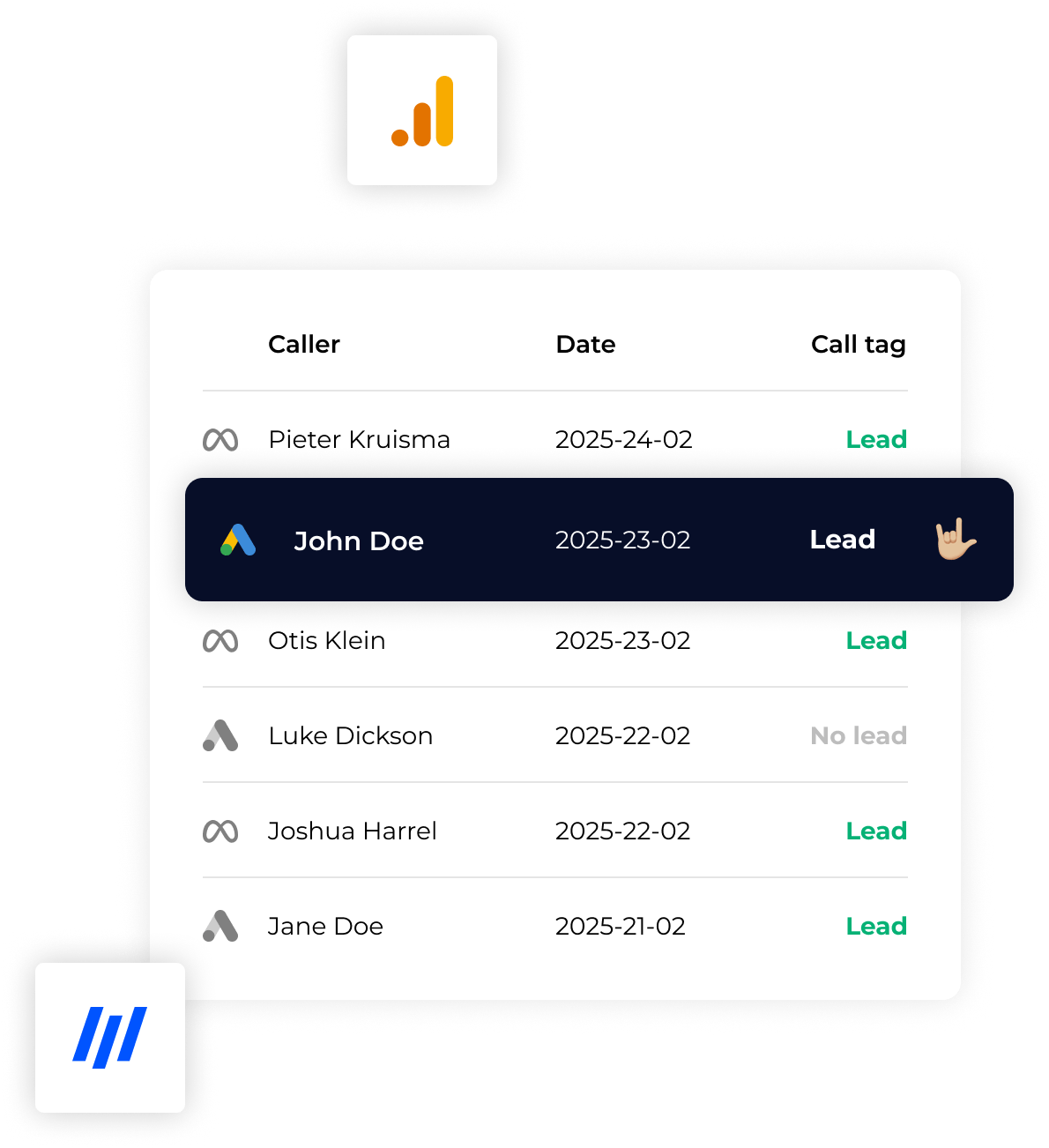
Why your campaigns are losing money without offline conversion tracking
Your campaigns are generating leads. Your dashboard looks good. Your cost per conversion is even going down. But your revenue still isn't growing.
And that’s one of those moments when you think: something’s not quite right here… but exactly what, that often remains unclear.
There’s a good chance you’re optimizing your campaigns based on the wrong metrics. Not because you’re doing anything “wrong” per se, but simply because you’re not seeing the whole picture.

The problem: you're basing your decisions on the wrong data
Most advertising platforms, such as Google Ads or Meta, actually only see a small fraction of what’s going on.
What they do see:
- Click
- Forms
- Basic conversions
But what they don't see:
- Which leads ultimately become customers
- Which deals actually generate revenue
- Which campaigns are truly profitable
And that’s the problem. Because your campaigns learn based on volume… not on value. That might sound like a subtle difference, but it’s actually quite significant.
What Goes Wrong Without Offline Conversion Tracking
1. You're optimizing for low-quality leads
Campaigns that generate a lot of forms seem to be successful. That’s what your dashboard tells you, too.
But in practice, you often see:
- Low-quality leads
- Little to no revenue
- Quite a waste of money, really
And yet campaigns like these keep running. Because they look “good.”
2. Your best campaigns remain invisible
Some campaigns may generate fewer leads… but they do bring in customers.
Without understanding what happens after the click, these kinds of campaigns are often discontinued. It’s pretty painful when you think about it.
3. Your algorithm is learning the wrong things
Platforms like Google Ads and Meta optimize based on data. That’s what they’re all about.
But if you send them the wrong signals—for example, by only accepting form submissions—they’ll start sending those in as well.
If you feed it bad data, you’ll get… well, usually bad results in return. It’s really that simple.
4. Your ROI is off
You think: “This campaign is working”
But in reality: it’s costing you money
And you only see that difference when you look beyond just the first conversion.
Case Study
Suppose:
Meta delivers: 100 leads → 1 customer
Google delivers: 10 leads → 5 customers
Without offline data, you'll probably go with Meta. Because, let's face it: more leads, lower cost per conversion.
But when it comes to offline data, the picture suddenly changes completely. In that case, you naturally choose Google. And this is exactly where the difference between profit and loss lies—not at the click, but afterward.
The solution: focusing on real results
With offline conversion tracking, you can finally start focusing on what really matters. That might sound obvious, but in practice, it happens surprisingly rarely.
- You link CRM data back to your ads
- You can see which campaigns are bringing in customers
- You focus on revenue rather than volume
As a result, your campaigns will:
- Smarter
- More efficient
- And ultimately: more profitable
What exactly is changing?
| Without tracking | With tracking |
|---|---|
| Focusing on leads | Customer-focused approach |
| Misguided optimizations | Better budget allocation |
| No insight into ROI | Complete insight into returns |
Why this is becoming increasingly important
Because of things like:
- Privacy Updates
- Less tracking via cookies
- Increasingly complex customer journeys
First-party data (such as CRM data) is becoming increasingly important. It may not necessarily be more enjoyable, but it is essential.
Offline conversion tracking is actually the way to make that data usable.
The bottom line
If your campaigns are losing money, it’s often not because of your strategy. More often than not, it’s due to the data you’re using—or rather, the data you’re missing.
Without understanding what happens after the click, you’re optimizing… somewhat blindly.
Do you really want to focus on profit? Find out how to implement offline conversion tracking.